




3D part localisation
Nominal is a promise. FalconEye® measures what arrived.
Fixtures shift, parts are cut and tacked within tolerance, and tolerances add up. FalconEye® scans the part in the cell and corrects the program before the arc starts.
Overview
Offline programs fail where the real part differs from the model.
A perfectly planned trajectory is still wrong if the part sits a few millimetres away from where the model says it is. FalconEye® closes that gap between digital programming and physical fabrication, so offline programs can be trusted on real production parts.
FalconEye® is a robot-mounted 3D vision system that measures the part in the cell before welding, compares it with the nominal model and corrects the robot's path to the real position and geometry.
How it works
From nominal geometry to corrected motion
FalconEye® works in four steps inside the welding cycle.
Scan
An industrial 3D camera mounted next to the torch captures the part from programmed viewpoints.
Capabilities
Engineered for the welding cell
Robot-mounted
The camera travels with the robot, so the part is seen from the angles that matter for the weld.
Model-based correction
Measurements are interpreted against the nominal model, not as an isolated point cloud.
Integrated with Lumen Weld®
Scan viewpoints and corrections are part of the generated program.
At a glance
FalconEye® in brief
- Sensor
- Industrial-grade structured-light 3D camera
- Mounting
- On the robot, protected by a rugged housing, mounted near the welding torch
- Reference
- Nominal CAD source model of the part
- Output
- Corrected welding trajectories
- Works with
- Lumen Weld® or standalone
Works with
Part of a larger loop.
With Lumen Weld®, FalconEye® closes the loop between offline programming and the physical cell. Where a camera is impractical, TouchMaster® provides tactile localisation with the welding wire.
Interface
Interface
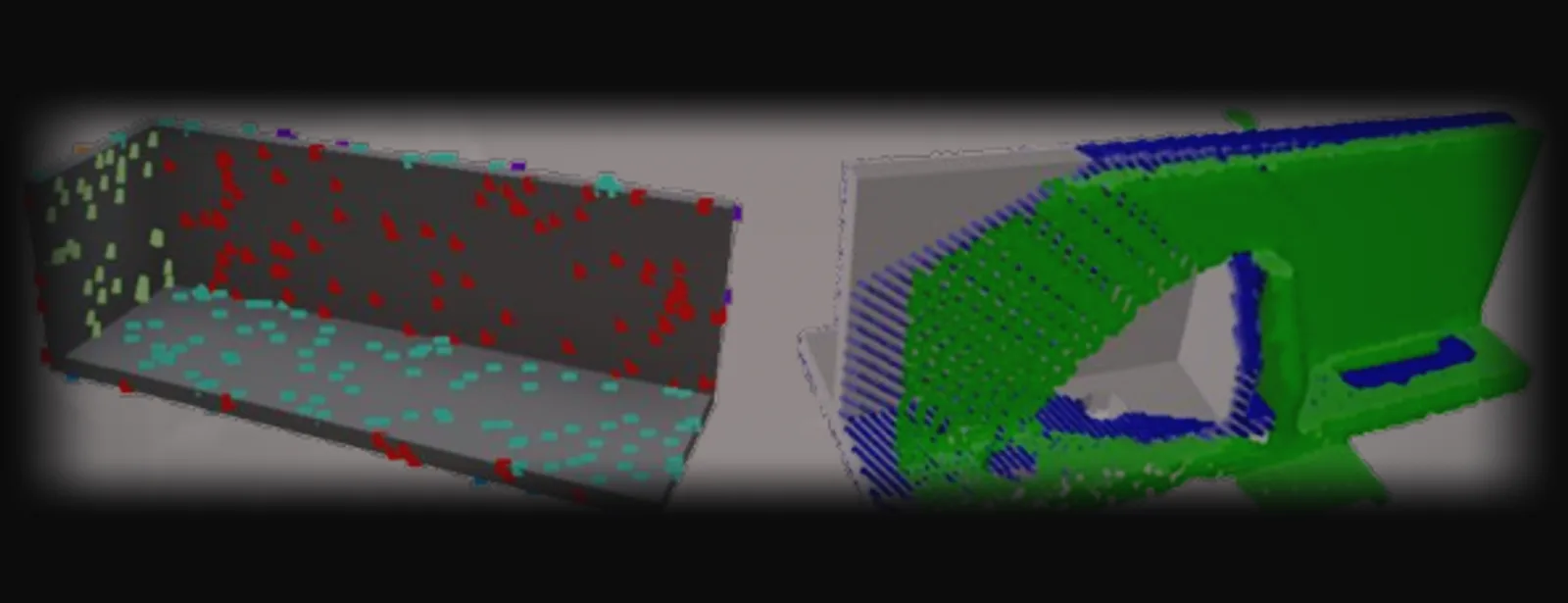
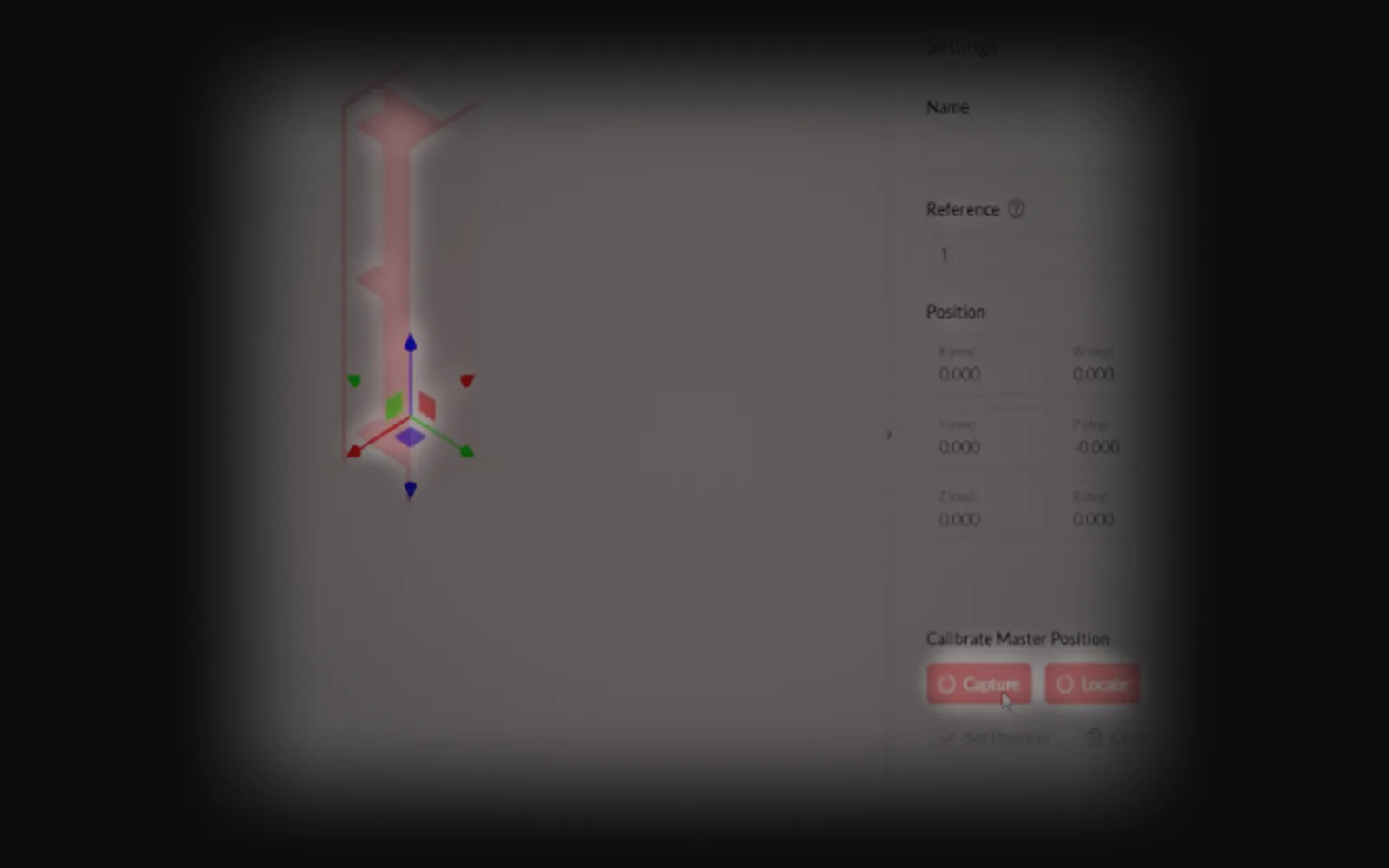
Scan results, matching and corrections are visible to the operator before the weld.
Placeholder · _source/products/falconeye/screenshots/03.png
FAQ
Questions engineers ask
How do we start with FalconEye®?
Contact us to discuss your application.
FalconEye® or TouchMaster®?
FalconEye® measures surfaces with a 3D camera and suits complex parts and larger deviations. However, it limits robot accessibility and the work envelope. It targets structural-steel applications. TouchMaster® uses the welding wire and needs no additional sensor. It is suitable for all general-industry applications. Applicability is decided on a case-by-case basis, depending on project scope, budget, cell and part types, as well as specific scenarios and limitations.
Next step
Show us the variation in your parts.
Tell us about your parts, where and how they deviate, and we will tell you if our system can absorb it and which system best suits your application.